
The Eraser and the Template: What Pininfarina’s Desk Taught Me About Real Design
2026-06-05
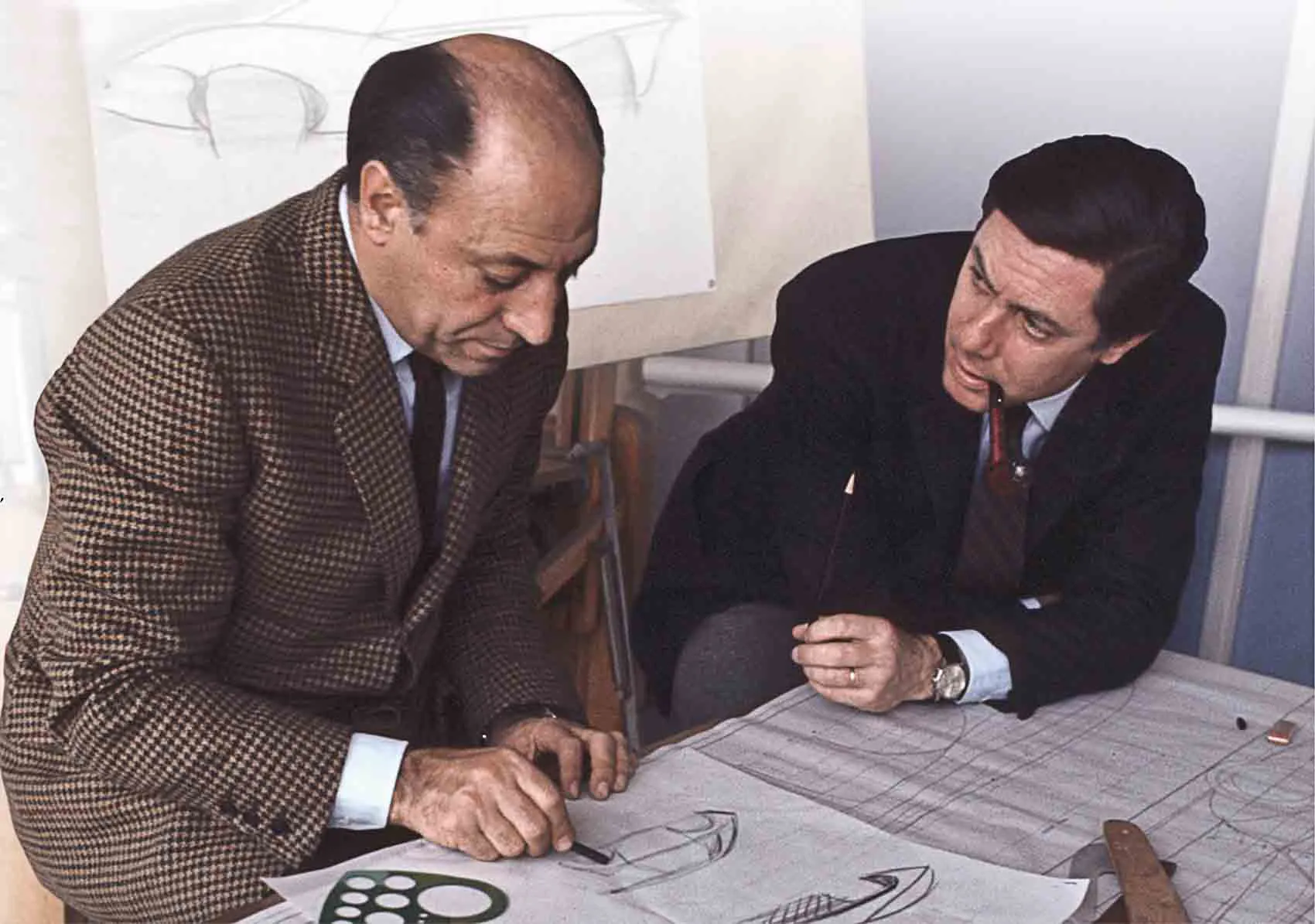
Not long ago, I was deep in the archives, scrolling through old photographs of the masters of car design. One image stopped me cold. It was a picture of Battista “Pinin” Farina’s workspace—a simple, unglamorous desk. On it, among the sketches and reference photos, sat two objects that transported me straight back to my bachelor’s degree: a set of circle and ellipse templates and a well-worn eraser.
I stared at that photo for a long time, and I smiled. Because if you’ve ever studied transportation design, you know exactly what those two humble tools represent. They represent a war.
The Purist’s Fallacy
In design school, I remember a strangely fierce, almost theological debate that would erupt in the studios. A certain breed of student—I’ll call them the purist nerds—held a very strong opinion: using a template is a sin. Touching an eraser is an admission of failure. To these self-appointed gatekeepers, a “real designer” conjures a perfect line straight from the soul onto the paper in a single, unassisted stroke. If you need a piece of plastic to draw an ellipse, or if you dare to correct a line, you lack talent. You are a fraud, and you will never be a great designer.
This dogma was always louder in the car design studio than among our product design colleagues. In transportation design, the mystique of the “pure sketch” carries an almost religious weight. The sketch, often rendered with flashy markers and dramatic wheel arches floating in mid-air, is worshipped not just as a communication tool, but as a performance of genius. And in that performance, there can be no props.
I never bought it. And that photograph of Pininfarina’s desk is my vindication.
The Master’s Tools
Battista “Pinin” Farina isn’t just one of the greatest designers of all time; he’s arguably the patriarch of Italian car design, the visionary behind icons like the Cisitalia 202, the Ferrari 250 GT, and countless Alfa Romeos and Lancias. His work didn’t just shape metal; it shaped an entire century of desire. And here he was, caught in a candid moment, with his circle template and eraser lying right next to his hand.
Pininfarina used tools. Let that sink in.
The presence of that eraser isn’t a sign of weakness; it’s the evidence of an iterative, relentless search for the right line. The template isn’t a crutch; it’s an acknowledgment that a mechanically perfect ellipse can serve as a launchpad for an intensely creative idea. These tools don't limit creativity; they liberate it. They allow a designer to move past the mechanical struggle and focus on proportion, stance, and emotion—the things that actually make a car iconic.
The amount of creativity a designer possesses has absolutely nothing to do with whether their French curve was made by a machine or their wrist. Creativity lives in the decisions you make, the proportions you choose, the gesture you capture. It’s not in the graphite; it’s in the grey matter.
The Sketch Is Not The Idea
This brings me to the second, connected conviction that I’ve formed after years of studying automotive history: the quality of a sketch has no correlation with the brilliance of the idea it represents.
I say this knowing it might be considered blasphemy in some sketch-off circles, but I’ve seen the evidence. I’ve pored over original design sketches from the 1950s, 60s, and 70s—the golden decades that gave us the most soul-stirring shapes ever to roll onto a road. And you know what? Many of those sketches are not technically beautiful.
Some of them have wonky perspective. Wheelbases are awkwardly stretched. Ellipses are shaky. The reflections are crudely hatched. By the rigid standards of a typical design school portfolio review, a few of these historic drawings would barely earn a passing glance. They aren’t artistic masterpieces; they aren’t flawless renderings.
And yet, trapped inside those imperfect lines was a kernel of perfect vision. An unconventional proportion that redefined elegance. A sharp, architectural shoulder line that turned a sedan into a predator. A face that would stare down decades of imitators. So many of the greatest, most iconic cars of all time were born not from a gallery-worthy vignette, but from a messy, searching, deeply honest sketch whose only job was to capture a brilliant idea before it evaporated.
The sketch was a conversation, not a final statement.
Conclusion: Worship the Thinking, Not the Drawing
The cult of the “pure sketch” in car design education does a disservice to students. It creates anxiety, stifles experimentation, and confuses means with ends. It makes you afraid of your own eraser. I was lucky enough to shake off that dogma early, and that photo of Pininfarina’s desk just cemented what I already felt in my gut: design is a practice, not a performance.
So, to any student reading this who feels a pang of guilt when your template clicks into place, or who hesitates before erasing a line for the fifth time: you are in excellent company. Focus on what the sketch is trying to say, not the sacredness of the marks themselves. The greatest designers in history were not artists protecting a fragile ego; they were problem-solvers using every resource available—circle templates, erasers, and their own messy, magnificent minds—to write history in steel.
The tools never designed the car. The eraser never erased the vision. And the template only traced the boundary of one thing: the empty purism that would have stopped genuine creativity before it even started.