
Toyota Supra MK4 Design Review & Specs
2026-06-26
1993 Toyota Supra - The Gentle Giant of Japanese Design
1. Overview
| Manufacturer | Toyota |
| Production | May 1993 – July 2002 |
| Model Year | 1994–2002 (1993 in Japan) |
| Assembly | Tahara Plant, Aichi, Japan |
| Layout | Front-engine, rear-wheel drive |
| Body Style | 2-door coupé (hatchback) |
| Chassis Code | A80 |
| Class | Sports car / Grand tourer |
| Predecessor | Toyota Supra MK3 (A70) |
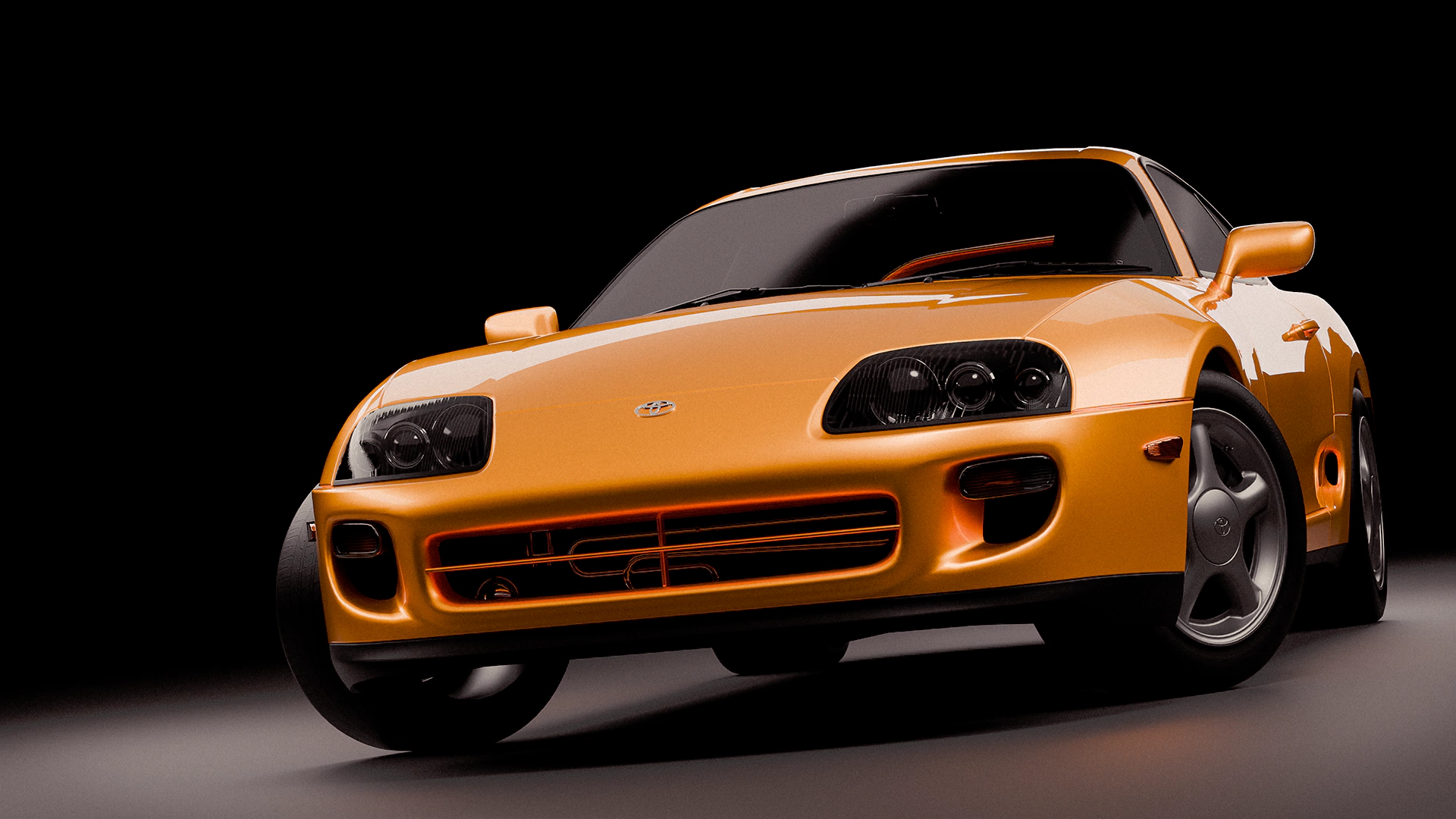
The Toyota Supra MK4 (A80) is the fourth and final generation of the Supra line. Launched in 1993, it abandoned the pop‑up headlights and sharper edges of its predecessor for a softer, more organic form language. Its bulging fenders, gentle curves, and almost‑friendly face earned it a devoted following—long before the 2JZ engine became a tuning legend. Today, it stands as one of the most recognisable and beloved Japanese sports cars of all time.
2. History & Development
2.1 The Supra Lineage
The Supra name first appeared in 1978 as a performance‑oriented variant of the Celica. By the time the A70 (MK3) arrived in 1986, the Supra had become a separate model, moving to a larger, more powerful 3.0‑litre inline‑six and adopting a more luxurious grand‑tourer character.
2.2 The A80 Project
Development of the fourth‑generation Supra began in 1989 under the project code “A80.” The engineering team, led by Isao Tsuzuki (who also oversaw exterior design), set out to create a car that would outperform its predecessor in every metric while being lighter, more rigid, and more aerodynamically efficient.
Toyota’s primary targets were the Nissan 300ZX (Z32), Mazda RX‑7 (FD), and Mitsubishi GTO/3000GT. The goal was not just straight‑line speed but a balanced, rewarding driving experience.
2.3 A New Design Philosophy
The design team, headed by Isao Tsuzuki, deliberately avoided the angular, aggressive trends of the early 1990s. Instead, they pursued a “soft and round” theme, inspired by the smooth, organic forms of fighter jets and marine mammals. The result was a car that looked powerful yet approachable—a sharp contrast to the more aggressive styling of its competitors.
2.4 Engineering Highlights
- Weight reduction: Despite being larger than the MK3, the A80 was about 100 kg lighter (the non‑turbo model weighed just 1,450 kg) thanks to extensive use of aluminium for the bonnet, roof, and suspension components.
- Aerodynamics: A drag coefficient of just 0.32 Cd, with zero lift (front and rear) achieved through careful underbody tuning and a rear spoiler that generated downforce without excessive drag.
- Engine: The 2JZ‑GTE 3.0‑litre twin‑turbo inline‑six became legendary for its cast‑iron block, closed‑deck design, and immense tuning potential.
3. Design Team
| Role | Name |
|---|---|
| Chief Designer (Exterior) | Isao Tsuzuki |
| Designer (Interior) | (Not publicly credited; Toyota internal team) |
| Chief Engineer | Isao Tsuzuki (also responsible for overall vehicle development) |
Isao Tsuzuki was the design lead for the A80, taking inspiration from the sleek, organic shapes he admired in aviation and nature. He insisted on a “gentle” design that would not intimidate but would still command respect. His vision proved timeless.
4. Exterior Design Analysis
4.1 Stance & Proportions
| Dimension | Measurement |
|---|---|
| Overall Length | 4,515 mm (177.8 in) |
| Overall Width | 1,811 mm (71.3 in) |
| Overall Height | 1,265 mm (49.8 in) |
| Wheelbase | 2,550 mm (100.4 in) |
| Front Track | 1,520 mm (59.8 in) |
| Rear Track | 1,520 mm (59.8 in) |
| Ground Clearance | 130 mm (5.1 in) |
The MK4 is a long‑bonnet, short‑deck coupé with a fastback roofline. Its front‑engine layout pushes the cabin rearward, giving it classic GT proportions. The wheel arches are pronounced but smoothly integrated, and the car sits low and wide, with a track that is virtually equal front and rear—a rare symmetry that contributes to its planted look.
4.2 The Soft and Round Volume
Almost nothing on the Supra is sharp. The fenders are rounded domes, the side vent under the door is a soft sculpt rather than a crisp blade, and the hood lines are shallow and polished. The shoulder line—instead of a traditional sharp crease—is a continuous, gentle swell that runs from the front light cluster all the way to the rear. This consistent, fluid surface treatment gives the car a cohesive, monolithic appearance, reinforcing its sense of mass without making it feel heavy.
4.3 The Face – Pareidolia and Japanese Charm
The front fascia is a masterpiece of visual psychology. The headlights are soft almond shapes, the air dam curves into a subtle grin—the car almost appears to smile. This taps into pareidolia, our brain’s tendency to see faces in objects. The Supra’s face is friendly, almost anime‑like, and deliberately non‑aggressive. This approach mirrors that of the Mazda MX‑5 (NA) and is deeply rooted in Japanese design culture, which often avoids overtly aggressive cues in favour of approachable, harmonious expressions.
4.4 Lighting Graphics
The Supra’s lights are among its most distinctive features:
- Rear: Four separate circular lamp units sit horizontally across the tail—a rare and instantly recognisable graphic. Each circle contains a combination of brake, tail, and indicator functions.
- Front: The headlights are also circular in theme, with clear lenses and projector beams. This front‑to‑rear circular motif ties the design together with remarkable consistency.
By moving away from pop‑up headlights (which the MK3 had), the A80’s fixed, sculptural units gave it a more mature, timeless face—a bold move in an era when pop‑ups were still fashionable.
4.5 The Missing Shoulder Crease
Most sports cars use a sharp shoulder line to add drama and visual speed. The Supra deliberately omits it. The side profile is uninterrupted by any hard edge; the volume swells and recedes smoothly. This decision could have made the car look bland, but because the entire body language stays consistent—the rounded fenders, the gentle arches, the soft side vent—the result is harmonious and confident. It’s a sign of design discipline: knowing when not to add a line.
4.6 Wheel Design
| Wheel Size (Turbo) | 17 x 8.0J front, 17 x 9.0J rear |
| Wheel Size (Non‑Turbo) | 16 x 7.5J front, 16 x 8.0J rear |
| Tyres (Turbo) | 235/45ZR17 front, 255/40ZR17 rear |
The stock five‑spoke wheels feature rounded spokes with soft transitions—no sharp edges. They echo the car’s overall gentle aesthetic while providing adequate cooling for the brakes. Later models received slightly different designs, but the original wheels remain a perfect match for the car’s soft‑but‑sporty character.
5. Interior Design
5.1 Cockpit Focus
The interior was designed around the driver. The centre console is tilted steeply toward the driver—reminiscent of an aircraft cockpit—placing climate controls, audio, and other switches within easy reach. The instrument cluster features large, clear analogue dials with a central tachometer, prioritising driving information above all else.
5.2 Ergonomics & Comfort
- Seats: Supportive sport seats with manual (or optional electric) adjustments. They offer a balance between lateral support for spirited driving and long‑distance comfort.
- Button layout: Deliberately minimal. Toyota kept the dashboard clean, avoiding unnecessary clutter. Door panels are simple and unadorned.
- Visibility: The large windows and thin A‑pillars give excellent outward vision, a stark contrast to many modern cars.
- Colour palette: Predominantly dark greys and blacks, with subtle metallic accents. The cabin feels purposeful and unfussy—it never overwhelms.
5.3 Storage & Practicality
The hatchback design offers a surprisingly spacious cargo area (approximately 300 litres), making the Supra a usable grand tourer. Rear seats are vestigial (or optional in some markets) but can accommodate small children or extra luggage.
5.4 Sound & Audio
Many models came with a premium sound system, and the interior was designed to reduce road noise, enhancing the GT experience—a testament to Toyota’s focus on usability.
6. Chassis & Suspension
6.1 Platform
The A80 uses a front‑engine, rear‑drive layout with a double‑wishbone suspension at all four corners. The chassis is a steel monocoque with aluminium‑reinforced subframes, benefiting from increased torsional rigidity (+50% over the MK3) without adding weight.
6.2 Suspension
| Component | Specification |
|---|---|
| Front Suspension | Double wishbone with coil springs and stabiliser bar |
| Rear Suspension | Double wishbone with coil springs and stabiliser bar |
| Front Brakes | 4‑piston ventilated discs (296 mm) |
| Rear Brakes | 2‑piston ventilated discs (307 mm) |
| Brake Assist | ABS standard |
The Supra also featured an optional Electronically Modulated Suspension (EMS) system on some models, allowing the driver to adjust damper stiffness between “Normal” and “Sport” modes.
6.3 Weight & Balance
| Non‑Turbo (5MT) | Turbo (6MT) | |
|---|---|---|
| Curb Weight | 1,450 kg (3,197 lb) | 1,510 kg (3,329 lb) |
| Weight Distribution | ~53% Front / 47% Rear | ~53% Front / 47% Rear |
The near‑even weight distribution contributes to its neutral handling, while the rear‑drive chassis is playful yet predictable.
6.4 Steering
| Component | Specification |
|---|---|
| Type | Rack and pinion with variable assist (engine‑speed sensitive) |
| Turning Radius | 5.7 m (18.7 ft) |
7. Engine & Performance
7.1 The Legendary 2JZ Family
The A80 was offered with two engines:
- 2JZ‑GE – 3.0‑litre naturally aspirated inline‑6
- 2JZ‑GTE – 3.0‑litre twin‑turbo inline‑6 (the legendary unit)
Both engines share the same cast‑iron block (closed‑deck) and aluminium cylinder head. The 2JZ‑GTE features sequential twin‑turbochargers (CT‑12B) with ceramic turbine wheels for rapid spool.
7.2 2JZ‑GTE Turbo Specifications
| Specification | Detail |
|---|---|
| Engine Code | 2JZ‑GTE |
| Configuration | Inline‑6, 24‑valve DOHC |
| Displacement | 2,997 cc (182.9 cu in) |
| Bore × Stroke | 86.0 mm × 86.0 mm (square) |
| Compression Ratio | 8.5:1 |
| Turbocharger | Twin CT‑12B, sequential |
| Fuel System | Electronic fuel injection (EFI) |
| Fuel Tank | 70 L (18.5 US gal) |
7.3 Power Output
| Japanese Spec | Export Spec (US/Europe) | |
|---|---|---|
| Power (GTE) | 280 PS (206 kW; 276 hp) @ 5,600 rpm (gentleman’s agreement) | 320 PS (235 kW; 315 hp) @ 5,600 rpm (with larger injectors and higher boost) |
| Torque (GTE) | 431 N·m (318 lb·ft) @ 4,000 rpm | 427 N·m (315 lb·ft) @ 4,000 rpm |
| Power (GE) | 225 PS (165 kW; 222 hp) @ 6,000 rpm | 225 PS (165 kW; 222 hp) @ 6,000 rpm |
| Torque (GE) | 284 N·m (209 lb·ft) @ 4,800 rpm | 284 N·m (209 lb·ft) @ 4,800 rpm |
7.4 Transmission
| 5‑speed Manual (GE) | 6‑speed Manual (GTE) | 4‑speed Automatic (GTE/GE) | |
|---|---|---|---|
| 1st | 3.251 | 3.827 | 2.804 |
| 2nd | 1.955 | 2.360 | 1.531 |
| 3rd | 1.310 | 1.685 | 1.000 |
| 4th | 1.000 | 1.312 | 0.705 |
| 5th | 0.753 | 1.000 | — |
| 6th | — | 0.793 | — |
| Reverse | 3.351 | 3.280 | 2.393 |
| Final Drive | 4.100 | 3.133 | 3.769 |
7.5 Performance Figures (Turbo, 6MT)
| Metric | Value |
|---|---|
| 0–60 mph | ~5.0 seconds |
| 0–100 mph | ~12.0 seconds |
| Quarter mile | ~13.5 seconds @ 106 mph |
| Top Speed | 155 mph (250 km/h, electronically limited) |
| Fuel Economy (combined) | ~19 mpg (US) |
8. Complete Specifications (1993 A80 Turbo)
Dimensions
| Overall Length | 4,515 mm (177.8 in) |
| Overall Width | 1,811 mm (71.3 in) |
| Overall Height | 1,265 mm (49.8 in) |
| Wheelbase | 2,550 mm (100.4 in) |
| Front Track | 1,520 mm (59.8 in) |
| Rear Track | 1,520 mm (59.8 in) |
| Ground Clearance | 130 mm (5.1 in) |
| Interior Length | 1,730 mm |
| Interior Width | 1,420 mm |
| Interior Height | 1,070 mm |
Weights & Capacities
| Non‑Turbo | Turbo | |
|---|---|---|
| Curb Weight | 1,450 kg (3,197 lb) | 1,510 kg (3,329 lb) |
| Seating | 2+2 (optional rear seats) | 2+2 |
| Cargo Volume | ~300 L | ~300 L |
Performance Summary (GTE)
| Metric | Value |
|---|---|
| Engine | 2JZ‑GTE twin‑turbo inline‑6 |
| Power | 320 PS (export) / 280 PS (Japan) |
| Torque | 427–431 N·m |
| 0‑60 mph | ~5.0 s |
| Top Speed | 155 mph (limited) |
9. Variants & Evolution
9.1 Model Year Changes (Japan)
- 1993 (S1): Launch model; 16‑inch wheels on non‑turbo, 17‑inch on turbo. Twin‑turbo (GTE) with 280 PS.
- 1994: Minor interior updates; new wheel designs.
- 1996: Updated turbocharger management for improved response; increased power in export markets.
- 1997: Facelift with redesigned front bumper, side skirts, and tail lights (clear lens). New colours.
- 1999: Final major update; introduced the “titanium grey” interior; revised suspension tuning.
9.2 Special Editions
| Edition | Details |
|---|---|
| SZ | Non‑turbo (2JZ‑GE) with 5‑speed manual, 16‑inch wheels. |
| SZ‑R | Non‑turbo with sport suspension and upgraded brakes. |
| RZ | Turbo (2JZ‑GTE) with 6‑speed manual, 17‑inch wheels, and larger brakes. |
| RZ‑S | Turbo with Recaro seats and higher‑spec audio. |
| Targa Top | Removable roof panel available on some turbo models (not officially sold in the US). |
| Limited Editions | Various regional specials (e.g., “Z Edition” in Japan, “10th Anniversary” in Europe). |
9.3 End of Production
Production of the A80 ceased in July 2002. Toyota decided to discontinue the Supra line to focus on more environmentally friendly models. Over its lifetime, approximately 45,000 units were built—making it relatively rare compared to its contemporaries.
10. Cultural Impact & Legacy
10.1 The Meme and the Myth
The Supra MK4’s fame exploded in the 2000s, largely thanks to the Fast and Furious franchise, where a heavily modified orange Supra became a cultural icon. The 2JZ engine’s incredible tuning potential—capable of supporting over 1,000 bhp with stock internals—cemented its status as a tuner’s dream.
But beyond the memes, the design itself has endured. Its soft, organic lines look nothing like the aggressive, crease‑festooned cars of the 2000s, yet they remain fresh. The Supra’s face, its gentle arches, and its cohesive volume still turn heads today.
10.2 A Design That Ages Warmly
The Supra does not try to impress with aggression. It is confident, consistent, and approachable. That is why, nearly 30 years later, it hasn’t aged—it has simply settled into itself. Few cars from the 1990s can claim the same; most look dated. The Supra looks timeless.
10.3 Influence on Toyota Design
The A80’s rounded, organic language influenced Toyota’s subsequent sports car concepts, including the FT‑1 and ultimately the new GR Supra (A90). While the new car is more angular, its overall profile and long‑bonnet stance owe a clear debt to its predecessor.
10.4 Market Value
Well‑preserved, unmodified A80 Supras (especially turbo manuals) have become highly collectible, with prices soaring into six‑figure territory in recent years. This is a testament not only to the engine’s legend but also to the enduring appeal of its design.
11. Poster
Download the official Asphalt Aesthetics Episode 1 poster: